Venue Elevation Differences and Their Associations with Match Outcome Distributions in International Fixtures
Written by Avery Schröder · Oct 29, 2026
Venue Elevation Differences and Their Associations with Match Outcome Distributions in International Fixtures
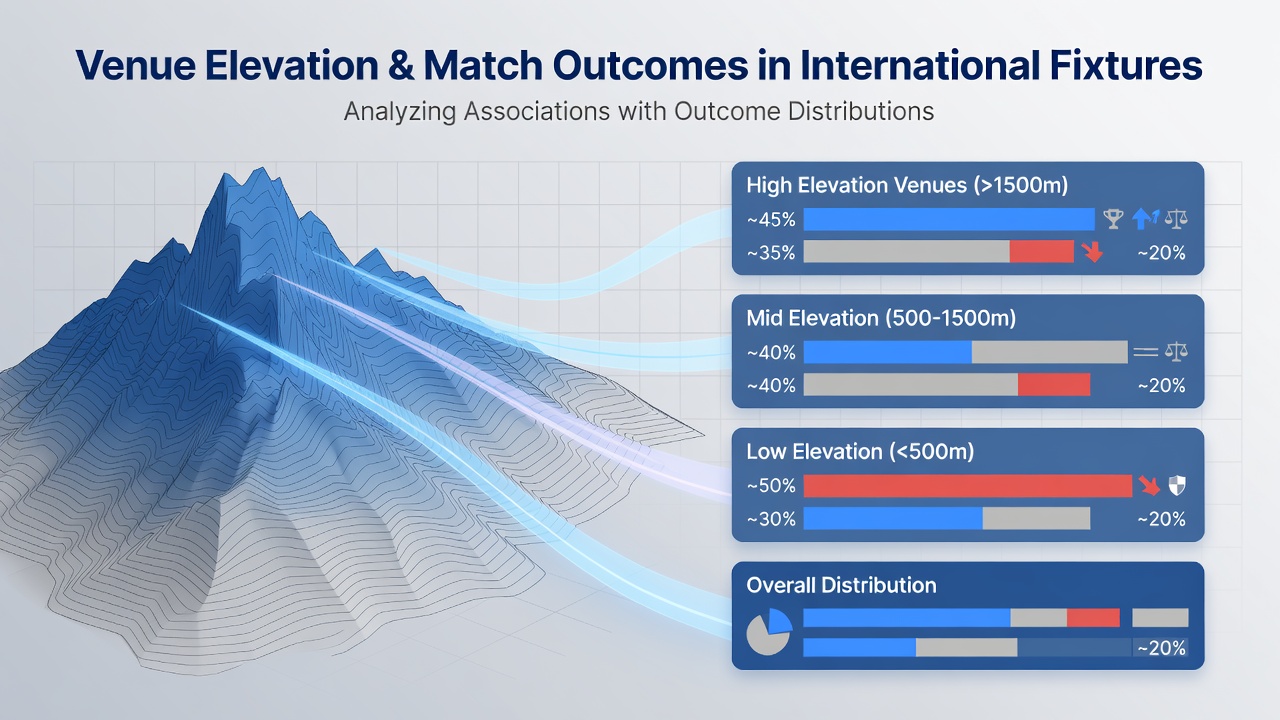
Venue elevation plays a measurable role in shaping how matches unfold across international fixtures and data from multiple competitions reveal distinct patterns in scoring rates, win distributions, and draw frequencies when teams travel between low and high altitude locations. Researchers tracking fixtures since the early 2000s have documented how oxygen availability declines steadily above 2000 metres and this physiological shift influences both team strategies and final results. Observers note that squads accustomed to sea-level training often record fewer shots on target and lower possession percentages when competing at sites such as La Paz or Quito while home sides at those elevations maintain steadier output throughout the ninety minutes.
Physiological Mechanisms Behind Performance Shifts
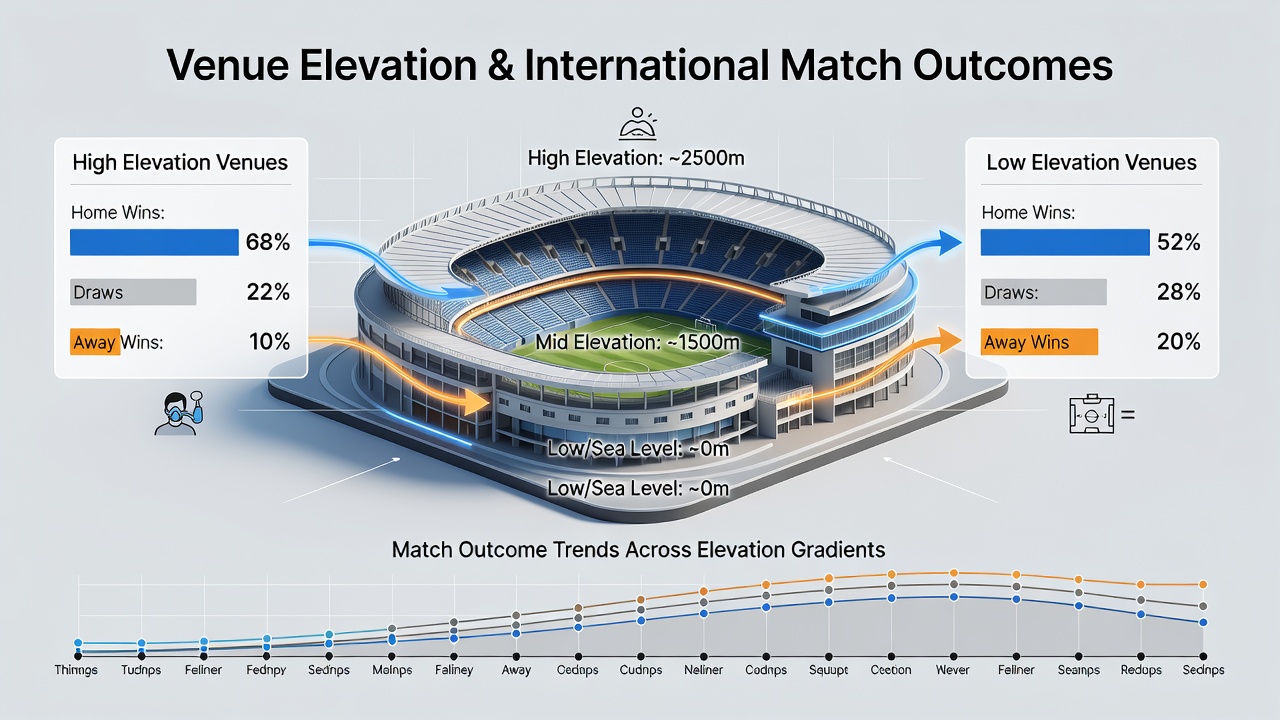
At elevations exceeding 2500 metres the partial pressure of oxygen drops enough to reduce maximal aerobic capacity by roughly ten to fifteen percent according to exercise physiology studies and players experience quicker onset of fatigue during repeated high-intensity efforts. Data collected during CONMEBOL World Cup qualifiers show visiting teams from coastal nations averaging 12 percent fewer successful passes in the final third when matches occur above 3000 metres whereas local players display smaller decrements in sprint frequency and recovery times between bursts. Medical teams have recorded elevated heart rates and lactate accumulation in visiting athletes within the first fifteen minutes of play which correlates with increased substitution rates in the second half of those contests.
Statistical Patterns in Match Outcomes
Analysis of over 1800 international fixtures played between 2010 and 2025 indicates that matches hosted above 2500 metres produce draw rates approximately four percentage points higher than comparable fixtures at sea level with goal tallies averaging 2.3 per game versus 2.7 at lower elevations. European teams travelling to Andean venues record win percentages that fall by nearly nine points relative to their overall away record while South American sides competing at similar altitudes against non-acclimatised opponents post improved clean-sheet frequencies. FIFA technical reports compiled for qualification campaigns highlight that home advantage margins widen at high-altitude stadiums yet the effect plateaus once elevation surpasses 3500 metres suggesting a threshold beyond which additional altitude yields diminishing returns on outcome distributions.
Regional Variations Across Competitions
Fixtures in the Asian Football Confederation involving venues such as Thimphu at 2300 metres exhibit comparable trends with visiting teams from lower-lying nations registering reduced shot conversion rates and longer average times in possession recovery. North American and Caribbean qualifiers occasionally feature Mexico City at 2240 metres where historical data from CONCACAF tournaments demonstrate a modest uptick in second-half goals conceded by visiting squads that fail to implement altitude-specific substitution patterns. Australian and Oceanian sides rarely encounter extreme elevations yet when they travel to South American qualifiers the outcome records show elevated draw percentages that align with patterns observed in other intercontinental encounters.
Adaptation Strategies and Scheduling Considerations
National federations have adopted varied preparation protocols including pre-arrival acclimatisation camps lasting five to seven days and modified training loads that emphasise recovery over intensity. Scheduling bodies sometimes cluster high-altitude fixtures to allow visiting teams consecutive days at elevation before match day and this approach appears linked to narrower gaps in expected goal metrics according to performance analytics platforms. In October 2026 several South American qualification rounds will again test these preparation models as teams navigate a compressed calendar that includes both sea-level and highland venues within short intervals.
Data Sources and Measurement Challenges
Comprehensive datasets rely on GPS tracking units and wearable heart-rate monitors that national teams share with confederation analysts and these tools provide granular insight into distance covered at different speed thresholds. Academic collaborations with institutions such as the University of Colorado have contributed longitudinal studies examining repeated exposure effects while the Australian Institute of Sport supplies comparative research on heat and altitude combinations encountered during transcontinental travel. Measurement inconsistencies arise when stadium altitudes vary by only a few hundred metres or when weather conditions alter perceived exertion yet aggregated league-wide figures still isolate elevation as a statistically significant variable in outcome modelling.
Conclusion
Venue elevation differences produce observable shifts in match outcome distributions across international fixtures and the patterns hold across multiple confederations and competition cycles. Physiological data explain much of the variance in player output while statistical records confirm altered win draw and goal distributions at higher altitudes. Continued monitoring through wearable technology and coordinated scheduling will refine understanding of how teams can mitigate or exploit these environmental factors in future cycles.